8 Fun Tongue Twisters for Kids to Try in 2025
Ever wondered how to make speech practice a delightful game instead of a chore? Tongue twisters for kids are the secret ingredient! These clever, catchy phrases are more than just silly sentences; they are powerful tools for enhancing articulation, improving phonetic awareness, and boosting linguistic confidence. By challenging children to navigate tricky sound combinations, we help them develop the muscle control and coordination needed for clear, confident communication. This fun-first approach aligns perfectly with the many recognised play-based learning benefits for kids, turning essential practice into engaging playtime.
This guide provides a curated collection of classic and challenging tongue twisters, complete with practical tips and playful strategies. From mastering the tricky 's' sound to distinguishing between 'r' and 'l', these rhymes offer a structured yet entertaining path to better speech. We will also touch upon how mastering one's native language can be a fantastic foundation for learning a new one, like Spanish, where clear pronunciation is equally vital for fluency.
1. Silly Sally Sells Seashells
One of the most classic tongue twisters for kids, this rhyme is a fantastic tool for mastering the tricky 's' sound. The full phrase, "She sells seashells by the seashore," is famous for its alliteration, forcing the speaker to distinguish between the 's' and 'sh' sounds. This makes it an excellent exercise for improving articulation and phonetic awareness in young learners.
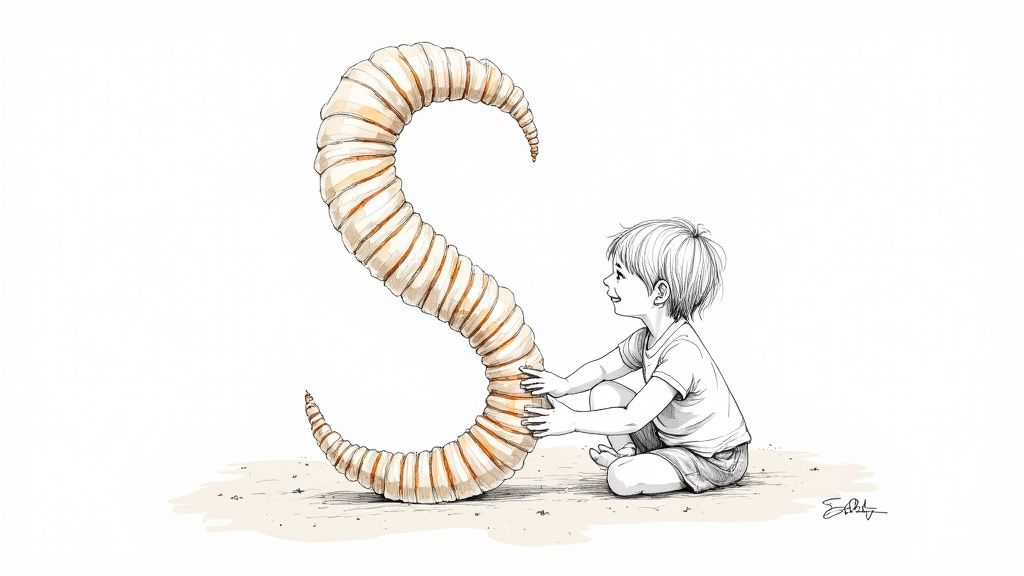
This particular tongue twister is a favourite in speech therapy sessions, especially for children who struggle with sibilant sounds, which are sounds like /s/, /z/, /ʃ/, and /ʒ/. The repetitive nature of the phrase helps build muscle memory in the tongue and mouth.
Why It's a Top Choice for Speech Development
The transition between the sharp 's' in "sells" and the softer 'sh' in "seashells" and "seashore" is a common challenge. Regularly practising this phrase helps children develop the fine motor control needed to produce these sounds clearly and correctly. It’s frequently used in primary school phonics lessons to highlight the difference between these consonant sounds in a fun, memorable way.
Actionable Tips for Parents
To make this tongue twister an effective learning activity, try these simple techniques:
- Start Slow: Begin by saying each word deliberately and clearly. Focus on correct pronunciation before trying to build speed.
- Exaggerate Movements: Show your child how to place their tongue behind their teeth for the 's' sound. Over-articulating the sounds helps them visualise and feel the correct mouth shape.
- Listen Back: Record your child saying the rhyme and play it back. Hearing themselves can help them self-correct and recognise areas for improvement in a playful context.
2. Peter Piper Picked a Peck of Pickled Peppers
This classic is one of the most well-known tongue twisters for kids, offering a playful challenge built on the plosive 'p' sound. The rhyme, "Peter Piper picked a peck of pickled peppers," relies heavily on alliteration, forcing the speaker to repeatedly form the sound by pressing their lips together and releasing a burst of air. It’s an excellent exercise for building lip strength and control.
Often used as a warm-up in drama classes and speech therapy, this tongue twister helps children articulate clearly without mumbling. The rhythm and narrative make it memorable and fun, encouraging repetition which is key for muscle memory development in speech. Its complex vowel patterns combined with the repetitive consonant make it a comprehensive workout for the mouth.
Why It's a Top Choice for Speech Development
The "Peter Piper" rhyme is particularly effective for practising bilabial sounds like /p/, which require both lips to articulate. Regularly practising this tongue twister helps children coordinate their breath control with precise lip movements. This coordination is fundamental for clear speech, and mastering it can improve overall enunciation, much like how learning a new language in a language exchange in Singapore enhances phonetic skills.
Actionable Tips for Parents
To turn this rhyme into a productive and fun activity, try these methods:
- Break It Down: Start with just "Peter Piper." Once mastered, add "picked a peck," and so on. Building the phrase piece by piece makes it less overwhelming.
- Focus on the 'P': Place a tissue in front of your child's mouth and ask them to make it flutter with the 'p' sound in "Piper" and "picked." This visual feedback helps them produce the sound correctly.
- Add a Rhythm: Clap or tap out a simple beat as you say the rhyme. Rhythm makes memorisation easier and helps control the pace, preventing words from blurring together.
3. How Much Wood Would a Woodchuck Chuck
This classic question-based rhyme is one of the most playful tongue twisters for kids, focusing on the repetitive 'w' and 'ch' sounds. The full version, "How much wood would a woodchuck chuck if a woodchuck could chuck wood?", uses clever wordplay and rhythm that captivates children. Its humorous, animal-centric theme makes it an engaging tool for speech practice and cognitive development.
This twister is frequently used in speech-language pathology sessions to help children differentiate between similar-sounding words like 'wood' and 'would'. The repetitive "ch" in "woodchuck" and "chuck" provides excellent practice for mastering this affricate sound, which requires a quick stop-and-release of air.
Why It's a Top Choice for Speech Development
The phrase challenges children to control their lip and tongue movements to produce clear 'w' and 'ch' sounds in rapid succession. Its questioning format also encourages critical thinking and a deeper understanding of homophones, which are words that sound the same but have different meanings. This makes it a valuable exercise not just for articulation, but for language comprehension as well.
Actionable Tips for Parents
To turn this tongue twister into a fun and effective learning activity, try these simple strategies:
- Emphasise the 'Ch' Sound: Show your child how to press their tongue to the roof of their mouth and release a puff of air to make the 'ch' sound correctly.
- Discuss the Wordplay: Talk about the joke in the rhyme. Ask your child, "What's the difference between 'wood' and 'would'?" This enhances engagement and reinforces vocabulary.
- Vary the Pace: Start slowly, ensuring each word is pronounced distinctly. As your child gains confidence, challenge them to say it faster and faster without stumbling.
4. Red Lorry, Yellow Lorry
This seemingly simple phrase is one of the most effective tongue twisters for kids for tackling the notoriously difficult 'r' and 'l' sounds. The challenge lies in the rapid succession of these phonemes, forcing the tongue to perform a quick gymnastic flip. It's particularly useful for distinguishing between these commonly confused sounds, a skill vital for clear speech.
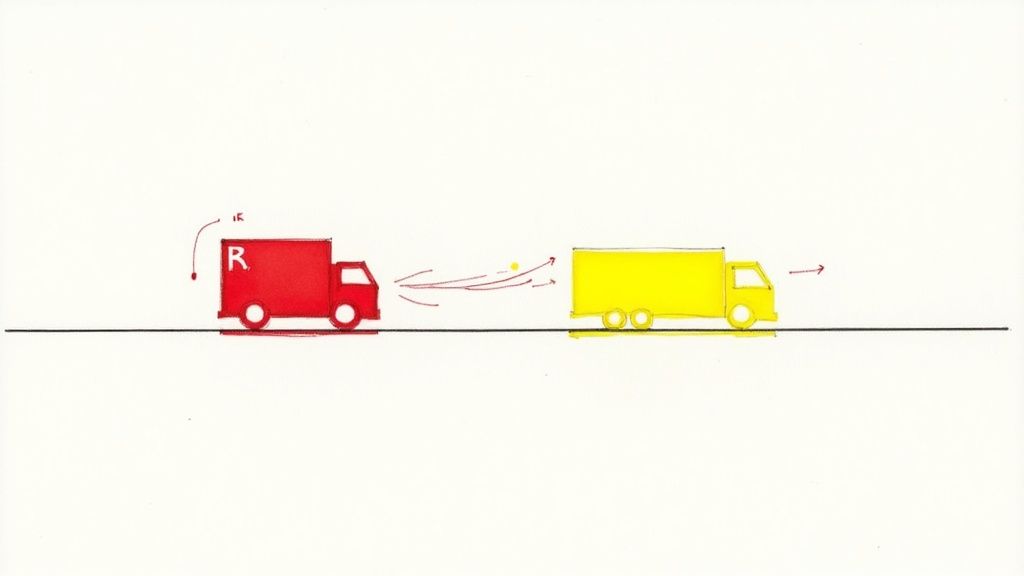
Often used in speech therapy for rhotacism (difficulty pronouncing 'r' sounds) and in ESL programmes, its repetitive nature helps build crucial motor memory. The challenge of mastering distinct consonant sounds is not unique to English; for example, learners can find similar hurdles when they want to improve in Mandarin Chinese. This makes "Red Lorry, Yellow Lorry" a universally great exercise for phonetic precision.
Why It's a Top Choice for Speech Development
The phrase requires precise and alternating tongue placements: the tip of the tongue touches the alveolar ridge (just behind the top front teeth) for 'l', then retracts without touching for 'r'. Regularly practising this sequence strengthens the tongue muscles and improves coordination. This focus on individual sounds makes it a favourite in British children's educational broadcasts for building foundational phonics skills.
Actionable Tips for Parents
To help your child master this tricky twister, try these practical steps:
- Focus on Tongue Position: Use a mirror to show your child the difference. For 'l', the tongue tip goes up ('la-la-la'). For 'r', the tongue curls back slightly without touching the roof of the mouth ('ruh-ruh-ruh').
- Build Speed Gradually: Start by saying "Red Lorry" slowly five times, then "Yellow Lorry" five times. Once they are confident, combine them and slowly increase the pace.
- Repeat for Motor Memory: The goal is rapid repetition. Challenge your child to say it ten times in a row without stumbling to turn the exercise into a fun game.
5. She Sells Seashells by the Seashore
This classic phrase is one of the most famous tongue twisters for kids, cherished for its elegant alliteration and seaside imagery. The full rhyme, "She sells seashells by the seashore," challenges speakers to navigate the subtle yet distinct differences between the /s/ and /sh/ sounds. It’s a foundational exercise for improving articulation and phonemic awareness in young children.
Often featured in phoneme awareness curricula and theme-based speech therapy, this tongue twister helps children master sibilant sounds. The narrative context of selling shells at the beach captures a child's imagination, making practice feel more like storytelling than a lesson.
Why It's a Top Choice for Speech Development
The primary challenge lies in the rapid transition between the hissing 's' in "sells" and the softer, breathier 'sh' in "seashells" and "seashore." Regularly practising this phrase builds crucial muscle memory in the tongue and lips. It is particularly effective for helping children understand how small changes in mouth shape can produce entirely different sounds, a key concept in phonics.
Actionable Tips for Parents
To transform this tongue twister into a fun and effective learning activity, try these tips:
- Sound Separation: Practise making the 's' and 'sh' sounds separately. For 'sh', encourage your child to round their lips and push them forward, as if saying "shhh."
- Visual Aids: Use real seashells or pictures of the beach to keep your child engaged. You can even set up a pretend "shop" to act out the rhyme.
- Start Slowly: Break the sentence down. Master "she sells," then "seashells," before combining them. Focus on clear, correct pronunciation before attempting to increase speed.
6. Fuzzy Wuzzy Was a Bear
This whimsical rhyme, "Fuzzy Wuzzy was a bear, Fuzzy Wuzzy had no hair, Fuzzy Wuzzy wasn't fuzzy, was he?", is one of the most charming tongue twisters for kids. It presents a playful narrative while targeting the tricky 'f' and 'z' consonant sounds. The absurdist humour of a hairless, non-fuzzy bear keeps children engaged and motivated to practise.
This tongue twister is particularly effective for helping children differentiate between voiced and unvoiced sounds. The unvoiced 'f' in "fuzzy" requires only air, while the voiced 'z' sound in "Wuzzy" and "was" requires vocal cord vibration. This makes it a popular tool in speech therapy sessions and early-years phonics lessons to build auditory discrimination skills.
Why It's a Top Choice for Speech Development
The repetitive nature of "Fuzzy Wuzzy" helps children master the lip and tongue positions needed for the 'f' and 'z' sounds. Regularly reciting this twister improves articulation and strengthens the oral muscles. Its use in children's speech development workbooks and playful classroom warm-ups highlights its value in making phonetic practice enjoyable and memorable for young learners.
Actionable Tips for Parents
To maximise the learning benefits of this tongue twister, try these simple approaches:
- Feel the Vibration: Ask your child to place their hand on their throat as they say "fuzzy" (no vibration for 'f') and "Wuzzy" (vibration for 'z'). This tactile feedback helps them physically feel the difference between voiced and unvoiced sounds.
- Exaggerate Facial Expressions: Over-articulate the sounds by showing your child how to bite their lower lip gently for the 'f' and smile to bring their teeth together for the 'z'.
- Embrace the Silliness: Discuss the nonsensical humour of a bear with no hair. Connecting the sounds to a funny story increases enjoyment and encourages repeated practice.
7. Toy Boat, Toy Boat, Toy Boat
This deceptively simple phrase is one of the more challenging tongue twisters for kids, focusing on the tricky 'oy' diphthong and the crisp 't' consonant. Despite its brevity, repeating "Toy boat" quickly becomes difficult because of the subtle but rapid mouth movements required. This makes it an excellent exercise for older children and even adults looking to refine their speech clarity and control.

Its notorious difficulty has made it a popular feature in competitive tongue twister challenges and even game shows. In speech pathology, it's used as an advanced practice tool to enhance articulation precision, showing how even the shortest phrases can provide a significant workout for the muscles involved in speech.
Why It's a Top Choice for Speech Development
The challenge lies in the quick transition from the rounded lip shape of 'oy' to the precise tongue-tip placement for 't'. Repeating this sequence rapidly tests and improves neuromuscular coordination. It’s a fantastic way to build oral motor skills and is particularly useful for children who tend to mumble or slur sounds together, forcing them to articulate each part of the word distinctly.
Actionable Tips for Parents
To master this tricky phrase, guide your child with these strategies:
- Start with One: Focus on saying a single "Toy boat" perfectly. Pay attention to the shape of the mouth for 'oy' and the sharp tap of the tongue for 't'.
- Build Gradually: Once one is clear, try saying it twice in a row: "Toy boat, toy boat." Only increase the repetitions once the previous number can be said without stumbling.
- Set Speed Challenges: Use a timer to see how many times they can say it correctly in 10 seconds. This turns practice into a fun and motivating game.
- Focus on Rhythm: Try clapping or tapping a steady beat while saying the phrase. This can help prevent the words from blurring together and improve pacing.
8. Unique New York
Don’t be fooled by its brevity; this phrase is one of the most deceptively challenging tongue twisters for kids. "Unique New York" focuses on the sustained 'oo' vowel sound in "unique" and the crisp consonant sounds in 'n', 'y', and 'k'. The quick shift between these distinct sounds makes it a fantastic workout for mouth and tongue coordination, teaching children how to handle uncommon phonetic combinations.
This particular tongue twister is a favourite warm-up for voice actors, public speakers, and performers because of how effectively it sharpens articulation. Its rhythmic quality also makes it an engaging tool in speech therapy sessions to build phonetic muscle memory in a short, memorable phrase.
Why It's a Top Choice for Speech Development
The difficulty lies in maintaining the long 'oo' sound in "unique" before quickly transitioning to the very different mouth shapes required for "New York". Regularly practising this helps children develop precise control over their lip and tongue movements. The inclusion of a proper noun also introduces a fun, geographical element to the phonics lesson, making it more memorable.
Actionable Tips for Parents
To turn this short phrase into a powerful speech exercise, try these simple techniques:
- Isolate the Sounds: Practise saying "oo-neek" and "noo-york" separately to master the individual components before combining them.
- Focus on the 'K': Encourage your child to make the final 'k' sound in "unique" and "York" sharp and clear. This helps prevent mumbling.
- Build Repetition: The key to this twister is repetition. Challenge your child to say it 10 to 15 times in a row, gradually increasing speed as they gain confidence.
Comparison of 8 Kids Tongue Twisters
| Tongue Twister | Complexity 🔄 | Resource needs 💡 | Expected outcomes ⭐📊 | Ideal use cases ⚡ | Key advantages ⭐ |
|---|---|---|---|---|---|
| Silly Sally Sells Seashells | Moderate 🔄 — repeated 's' patterns, suitable for young learners | Low 💡 — optional shells, recording device for feedback | ⭐⭐ — improves 's' articulation and phonetic awareness 📊 | Quick group recitations, early phonics, SLP for sibilants ⚡ | Memorable narrative; child-friendly engagement ⭐ |
| Peter Piper Picked a Peck of Pickled Peppers | High 🔄 — multilayered plosive and multisyllabic structure | Low–Medium 💡 — segmenting, gestures, line-by-line practice | ⭐⭐⭐ — develops plosive control, syllable/stress patterns 📊 | Speech/drama warm-ups, extended articulation drills ⚡ | Sustained practice; teaches syllable awareness and rhythm ⭐ |
| How Much Wood Would a Woodchuck Chuck | Moderate–High 🔄 — 'w' + 'ch' blends with recursive question form | Low 💡 — discussion prompts, pacing cues | ⭐⭐ — practices consonant blends, breath control; builds humor-based engagement 📊 | SLP sessions for blends, classroom participation, comedy/drama ⚡ | Entertaining; encourages participation and pause control ⭐ |
| Red Lorry, Yellow Lorry | Moderate 🔄 — rapid alternation of 'r' vs 'l' sounds, high speed potential | Low 💡 — mirror practice, rapid repetition sets | ⭐⭐ — strong for r/l differentiation and motor memory 📊 | Short drills, ESL pronunciation, British English-focused therapy ⚡ | Extremely short and repeatable; fast motor learning ⭐ |
| She Sells Seashells by the Seashore | Moderate 🔄 — combined 's' and 'sh' contrasts with melodic cadence | Low 💡 — props/images, separate 's'/'sh' practice | ⭐⭐⭐ — teaches distinction between 's' and 'sh' and cadence 📊 | Phoneme awareness lessons, themed therapy, mixed-age groups ⚡ | Musical quality; broad age applicability and visual imagery ⭐ |
| Fuzzy Wuzzy Was a Bear | Moderate 🔄 — alternating fricatives ('f' vs 'z') with humorous content | Low 💡 — exaggerated articulation, themed activities | ⭐⭐ — improves fricative articulation and phonological awareness 📊 | Playful warm-ups, articulation treatment, early intervention ⚡ | Humorous and engaging; good for children with delays ⭐ |
| Toy Boat, Toy Boat, Toy Boat | High 🔄 — maximal motor control despite brief length | Low–Medium 💡 — recordings, precision drills, speed challenges | ⭐⭐⭐ — builds diphthong consistency and fine articulatory control 📊 | Advanced SLP practice, competitions, performer warm-ups ⚡ | Extremely efficient difficulty-to-length ratio; confidence builder ⭐ |
| Unique New York | High 🔄 — short but tricky vowel + consonant transitions | Low 💡 — rapid repeats, pair with other twisters for variety | ⭐⭐ — quick warm-up for vowel sustain and crisp consonants 📊 | Pre-performance warm-ups, quick SLP drills, contests ⚡ | Very brief and efficient; good for fast practice cycles ⭐ |
From Fun Rhymes to Fluent Conversations
From the silly sounds of "Fuzzy Wuzzy" to the complex consonant clusters in "Red Lorry, Yellow Lorry," we have explored a vibrant collection of tongue twisters for kids. These playful phrases are much more than just a source of giggles; they are powerful tools for linguistic development. By practising these twisters, children actively enhance their pronunciation, improve articulation, and build the oral motor skills necessary for clear, confident communication. The journey through each rhyme, from a slow, deliberate start to a faster, more fluid recitation, is a miniature masterclass in phonetics.
The key takeaway is that consistency and a fun-loving attitude are paramount. The goal isn't immediate perfection but gradual improvement and the development of phonetic awareness. You've learned how to break down difficult sounds, turn practice into a game, and celebrate every small victory. These strategies empower you to support your child's speech development in a way that feels like play, not work. This foundation in mastering the sounds of one language builds a crucial skill set that can make learning another language significantly easier. The confidence gained from conquering tricky English phrases can ignite a curiosity for new linguistic challenges.
This newfound appreciation for the mechanics of speech and sound is the perfect springboard for exploring new languages. The same focus, articulation, and playful repetition used for tongue twisters are fundamental to acquiring bilingual fluency. When a child realises they can master complex sounds, it opens up a world of communicative possibilities.
Ready to channel that linguistic curiosity into a new adventure? At Spanish Council Singapore, our native teachers use dynamic, interactive methods that make learning a new language as engaging as mastering a favourite tongue twister. Explore our Spanish programmes for children and discover how a playful start can lead to lifelong bilingual skills. Visit us at Spanish Council Singapore to book a trial class today.