Finding the Best Classes for French in Singapore
So, you're ready to learn French in Singapore? That's fantastic. You’ve got a whole spectrum of choices, from structured group classes at proper language centres to one-on-one private lessons that work around your hectic schedule. The real trick is figuring out which path clicks with your goals—whether you're dreaming of strolling through Paris, boosting your career, or just learning for the sheer joy of it.
Getting Started on Your French Learning Journey in Singapore

Deciding to learn French is the easy part. The language opens doors to new cultures and can be a serious asset professionally. But with so many schools and tutors in Singapore, it’s easy to feel a bit lost. Let's cut through the noise and get you on the right track.
Before you even book a trial class, it helps to be realistic about what you're signing up for. Getting good at French is a marathon, not a sprint. A clear understanding of the time and money involved from the get-go will make the whole process smoother and way more enjoyable.
What’s the Real Investment?
Learning French is a popular choice here, and for good reason. It's a language that connects people globally. In Singapore, you can expect regular group classes to cost somewhere between $1,500 to $2,000 per year.
To put that into perspective, reaching a B2 level—which is what many French universities look for—usually takes about 1.5 to 2 years of consistent effort. This framework, known as the Common European Framework of Reference (CEFR), is the standard for gauging language ability.
A Quick Guide to French Learning Pathways
To help you visualise the options, here’s a quick breakdown of the most common learning pathways in Singapore.
| Class Type | Best For | Average Annual Cost (SGD) | Typical Time Commitment |
|---|---|---|---|
| Language Centre Group Class | Structured learning, social interaction, and official certification. | $1,500 – $2,000 | 2-4 hours per week |
| Private Tutoring | Personalised attention, flexible scheduling, and focused goals. | $3,500 – $6,000+ | 1-3 hours per week |
| Online Courses | Self-paced learning, budget-conscious learners, and schedule flexibility. | $200 – $800 | Varies by learner |
| Community Centre Classes | Casual learning, affordability, and trying out the language. | $100 – $300 | 1.5-2 hours per week |
This table should give you a starting point for figuring out what fits your budget and lifestyle best.
It’s Not Just About the Classroom
Formal lessons are essential, but true fluency happens when you take the language outside the classroom. You need to immerse yourself. Actively finding ways to chat with native speakers or other learners will supercharge your progress.
"The classroom provides the foundation, but real-world interaction is where language truly comes to life. Don't underestimate the power of casual conversation and cultural exchange in mastering a new tongue."
Try connecting with the local francophone community or checking out French cultural events. This transforms your learning from a chore into a living, breathing part of your life. You could even look into a language exchange in Singapore to get that crucial conversational practice. It’s effective, and honestly, a lot more fun.
So, you’ve decided to learn French. That’s fantastic. But before you get swept up looking at different classes for french in Singapore, let's pump the brakes for a second. The most crucial first step is to figure out your why.
Getting specific about your reasons for learning is the single best way to find a course that actually works for you and keeps you motivated. "I want to speak French" is a great start, but it's too vague. Let's dig a little deeper.
What’s Your End Game?
Think about where you see yourself using French. Is it for a specific, upcoming need? For instance, maybe you’re a university student gunning for an exchange programme in Lyon. In that case, you'll need solid academic French—the kind that lets you write essays and follow complex lectures.
Or perhaps your company is making inroads into francophone markets. Suddenly, you need to navigate business meetings, write professional emails, and understand industry-specific jargon. That's a completely different ball game.
Here are a few common scenarios I see all the time:
-
The Globetrotter: You're dreaming of wandering through Montmartre, ordering a pain au chocolat without fumbling, and actually chatting with the locals in a small village in Provence. Your goal is practical, conversational French. You need the phrases and confidence for real-world situations, not dense grammar drills.
-
The Scholar: You're aiming for academic success. This means you need a structured path, one that focuses on formal writing, critical reading, and maybe even leads to official certifications like the DELF or DALF.
-
The Professional: Your career is the driver. You need to sound polished and competent in a business setting. The focus here is on mastering professional etiquette, specific vocabulary for your field, and maybe even presentation skills.
This isn't just a navel-gazing exercise. Your "why" dictates everything: the class format, the teacher's style, and the curriculum. A laid-back conversational class will feel completely wrong for someone needing to ace a business pitch in Paris.
Once you’ve nailed down your primary motivation, the rest of the process becomes so much clearer. You can immediately cut through the noise and zero in on the programmes that will get you where you want to go.
Comparing French Language Schools and Programmes
Alright, now that you know why you want to learn French, it's time to figure out where. The search for the right classes for French isn't about finding some mythical "best" school in Singapore; it's about finding the one that fits you like a glove.
Let’s look at the main options on the table.
Dedicated Language Centres vs. International Schools
Dedicated language hubs, like the renowned Alliance Française, offer a very structured, almost academic, path. They are fantastic if you’re serious about getting official certifications like the DELF or DALF, as their entire curriculum is usually built around these exams. Plus, the group setting is a huge bonus for practising with other learners.
For younger students or anyone craving total immersion, international schools are a whole different ball game. These schools aren't just about language lessons; they offer a full bilingual environment.
A great example is the International French School (Singapore). It follows the French National Curriculum but within a French-English framework. The results speak for themselves: they boast a 100% pass rate for the French Baccalaureate, and an incredible three-quarters of their students graduate with distinction. This is a serious commitment, but the level of immersion is second to none.
Choosing a learning environment is like picking a workout style. A structured gym class is great for some, while a personal trainer offers tailored results. Neither is better—they just serve different goals. Your perfect French programme works the same way.
The Power of Personalised Learning
If a rigid schedule just won't work for you, private tutors and online platforms are your best friends. They offer a level of flexibility that's a lifesaver for busy professionals or parents. A private tutor can zero in on your specific weaknesses and tailor every single lesson to your pace, which can make a huge difference in how quickly you progress.
Here’s a breakdown to help you weigh your options:
Comparing French Learning Environments
This table gives you a quick snapshot of what to expect from each type of learning environment.
| Feature | Language Centre | International School | Private Tutor/Online |
|---|---|---|---|
| Structure | Highly structured, curriculum-based | Fully immersive, integrated with academic subjects | Highly flexible and customisable |
| Best For | Exam prep (DELF/DALF), adult learners | Children & teens, deep cultural immersion | Busy individuals, targeted skill improvement |
| Social Aspect | Group classes, community events | Full school community, extracurriculars | One-on-one, limited to instructor interaction |
| Cost | Mid-range | High (significant investment) | Varies widely, can be high per hour |
| Pacing | Fixed class schedule | Follows academic calendar | Completely self-paced |
Ultimately, the right choice depends on your budget, schedule, and how you learn best. There’s no single answer for everyone.
It can feel like a lot to take in, but breaking it down by your preferred learning style is a solid first step. For more tips, check out our guide on choosing a language school in Singapore.
The infographic below really helps visualise how your reasons for learning should steer your decision.
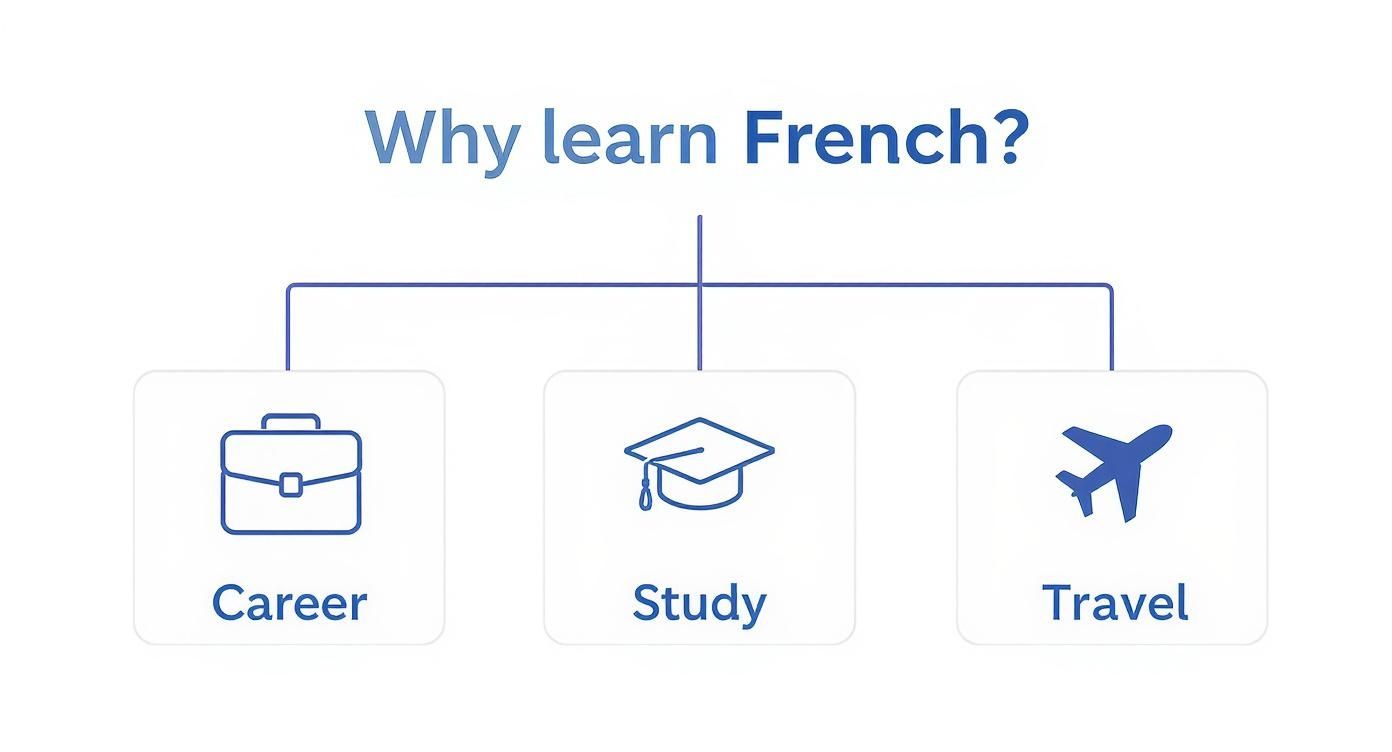
As you can see, your 'why' is the most important clue to finding your 'where'. It's all about matching the environment to your personal goals.
What to Look For Before You Enrol
So, you've got a shortlist of potential French schools. Great start! Now it's time to dig a little deeper, past the slick websites and glossy brochures, to see what they're really made of.
https://www.youtube.com/embed/Pme5Ro8kha0
Finding the best classes for French isn't about picking the school with the flashiest ads. It's about finding the place that genuinely delivers results. Your job now is to get a real feel for what a typical class is like before you commit your time and money.
First up, let's talk about the teachers. A native speaker is a huge plus, but it's not the only thing that matters. You need to ask if they have professional teaching qualifications, like a FLE (Français Langue Étrangère) certification. There's a world of difference between a passionate native who just speaks the language and a trained professional who knows how to break down tricky grammar for an English speaker. The latter is what you're looking for.
Then, take a close look at the curriculum. Don't be shy—ask to see the course materials. Are they using modern, engaging textbooks and digital resources, or does it look like they're handing out photocopies from a textbook printed in 1995? The right materials make all the difference, turning learning from a chore into something you actually look forward to.
Is It More Than Just a Classroom?
Learning a language is about more than just memorising vocabulary; it's about immersing yourself in a culture and a community. Does the school you're considering actually create a genuine francophone atmosphere? You want to find a place that offers chances to practise your new skills outside of a formal lesson.
Look for signs of a thriving learning community:
- Cultural Events: Do they organise things like French film nights, cheese and wine tastings, or workshops on French culture?
- Conversation Groups: Are there casual meet-ups or clubs where you can just chat and practise speaking without pressure?
- The General Vibe: When you walk in, does it feel welcoming? Do the other students look like they're actually enjoying themselves?
The goal is to find a place that encourages you to live the language, not just study it. A school that organises social events provides invaluable opportunities to use your French in a relaxed, real-world setting, which is where true progress happens.
Getting the Most Out of a Trial Class
A trial class or an open day is your golden ticket. This isn't just for them to assess your level; it's your chance to interview them. Walk in prepared with some sharp questions that get right to the point.
For example, ask how they balance the different language skills. How much class time is dedicated to speaking versus writing or grammar drills? It's also smart to ask about the practical stuff, like their policy on missed classes and whether make-up lessons are available. These details are what determine if a programme will actually fit into your real, busy life.
Making the Most of Your Learning In and Out of Class
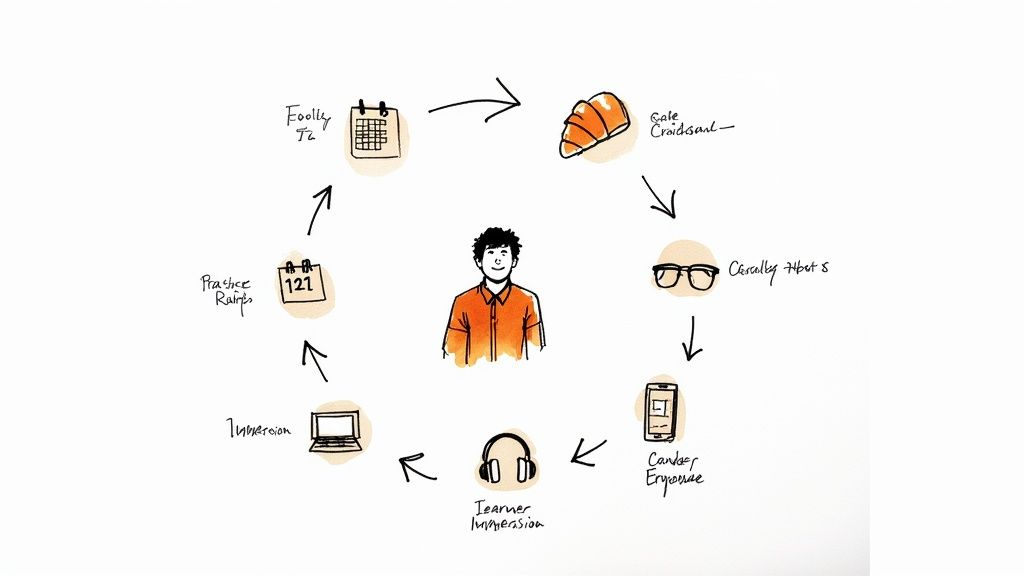
Signing up for the perfect French class is a brilliant first step, but the real magic happens outside the classroom. True fluency isn't just about what you learn during your lesson; it's about what you do between them to turn that knowledge into a genuine skill.
Don't be shy about speaking up in class, even if you’re worried about making mistakes. Trust me, every single error is a stepping stone. If you feel a bit hesitant, try preparing a question or two before each session. It’s a small trick, but it makes raising your hand feel so much easier.
Create Your Own French Bubble
You don't have to be wandering the streets of Paris to immerse yourself in French. You can build your own little francophone world right here in Singapore. The goal is to make the language a natural part of your daily life, not just another subject to study.
- Switch up your media: Change your phone's language setting to French for a day. Pop on a French podcast during your MRT commute or unwind with a French series on Netflix.
- Find local connections: Look for conversation groups or cultural events organised by the French community in Singapore. It's a great way to practise in a real-world setting.
- Label your world: This might sound silly, but it works. Stick post-it notes with French words on things around your home—the fridge (le frigo), the mirror (le miroir). You’ll absorb vocabulary without even trying.
If your course has an online element, getting familiar with effective strategies for student engagement in online learning can make a huge difference. And for those days you want to do a bit extra on your own, our guide on https://spanish.sg/blog/how-to-learn-french-on-your-own is packed with more ideas.
The secret to fast-tracking your progress is turning that weekly lesson into a daily habit. A little bit of consistent effort every day is far more powerful than cramming everything into one long study session.
This mindset is particularly useful in Singapore, where French is gaining serious traction. There are now more than 10,000 learners in the country, and French universities have established over 100 partnerships with local institutions to encourage student exchanges. The community is growing, and there’s never been a better time to dive in.
Answering Your Top Questions About French Classes in Singapore
When you're thinking about diving into French lessons, it's natural for a few practical questions to pop up. Let's tackle some of the most common ones I hear from students in Singapore, so you can feel confident starting your language journey.
"How Long Will It Actually Take to Speak French?"
This is the big one, isn't it? While "fluency" means different things to different people, reaching a point where you can hold a decent conversation (what we call a B1 level) usually takes about 500-600 hours of dedicated learning.
If you're attending class once a week, you're looking at roughly 1.5 to 2 years of consistent study. The secret isn't about cramming; it's about making French a regular part of your life. Steady practice is what gets you there.
"Are Pricier Classes Always Better?"
It's tempting to think a higher price tag guarantees better quality, but that's not always the case. A premium fee might just mean the school has a swanky location in the CBD or keeps its classes tiny, which are nice perks, but not the whole story.
Honestly, an affordable course led by a passionate, experienced teacher will do you a world of good—far more than a costly class with a rigid curriculum that doesn't fit what you need. My advice? Always ask for a trial lesson before you sign on the dotted line.
Finding an instructor you connect with and a curriculum that actually excites you is what matters most. That personal connection will carry you much further than a fancy brand name or a hefty price tag.
"Do I Really Need to Get a DELF or DALF Certificate?"
Ah, the official diplomas. Whether you need a DELF or DALF certificate really boils down to why you're learning French.
These qualifications are pretty much non-negotiable if your plans include:
- Enrolling in a French university.
- Moving to a French-speaking country like France or Canada.
- Applying for jobs that demand official proof of your French skills.
But if you're learning for the love of it, for travel, or just to expand your horizons, you can absolutely skip the exams. That said, they can be a fantastic way to stay motivated and give you a clear goal to aim for.
At Spanish Council Singapore, we believe that learning a new language should be effective, engaging, and tailored to you. While we specialise in Spanish, the core ideas of great teaching and clear goals hold true for any language. Take a look at our courses to see how the right environment can make all the difference.