Your Guide to Authentic Tapas Bar Food
Tapas isn't just about small appetisers. It's a whole social and cultural experience built around sharing a bunch of different flavours with good company. Think of it a bit like enjoying Singapore's hawker culture—the real point is the conversation and community you build over an array of tasty bites.
Discover the True Meaning of Tapas
If you think tapas are just "small plates," you're only seeing part of the picture. At its heart, tapas is a philosophy of eating. It’s an active, social ritual, a way of dining that revolves around lively conversation and exploring a mosaic of tastes together. This tradition is deeply woven into Spanish culture, where it’s less about just filling your stomach and more about connecting with people.
The custom, known as tapear, is all about hopping from one buzzing bar to the next, grabbing a drink and a small dish at each place. It’s a wonderfully communal way to spend an evening, which is probably why it feels so at home here in Singapore, where gathering over food is such a big part of our lives.
The real magic of tapas lies not just in the food itself, but in the vibrant, communal atmosphere it creates. It transforms a simple outing into a shared culinary adventure.
To really get what makes tapas so special, you have to understand its building blocks. A great place to start is by exploring the foundational role of olive oil, which is truly the cornerstone of Spanish cooking. Once you understand that philosophy, every dish you taste becomes that much more meaningful and delicious.
The Essential Tapas Dishes You Must Try
Walking into a buzzing tapas bar for the first time can be a little overwhelming, especially when faced with a menu crowded with Spanish names. The best way to dive in is to get familiar with the classics—the all-star team of Spanish cuisine. Each dish brings something unique to the party, and trying a few together is what the experience is all about.
This infographic gives you a quick visual guide to five of the most famous tapas you'll find. It’s a great starting point for understanding the sheer variety on offer.
As you can see, great tapas is a game of contrasts—crispy textures meet creamy sauces, and sizzling seafood sits alongside savoury cured meats. Let's get to know these iconic dishes a bit better.
Staples of the Spanish Table
Patatas Bravas is the gateway to the world of tapas, and for good reason. Imagine perfectly fried, fluffy-on-the-inside potato cubes, generously topped with two distinct sauces: a fiery, paprika-laced tomato sauce (salsa brava) and a cool, creamy garlic aioli. It's a simple idea, but the combination is pure magic.
Then you have Gambas al Ajillo, or garlic prawns. This dish makes an entrance, arriving at your table still sizzling wildly in its clay dish. The prawns are bathed in a glorious olive oil infused with heaps of garlic and just a whisper of chilli. Pro tip: save some bread to mop up every last drop of that incredible oil.
Another cornerstone of any tapas menu is the Tortilla Española. This isn't your typical breakfast omelette. It's a thick, hearty slice of comfort, made with just eggs, potatoes, and sometimes a bit of onion, all slow-cooked in olive oil. Served warm or at room temperature, it’s a true taste of Spanish home-style cooking.
The Crown Jewels of Tapas
No tapas adventure is truly complete until you’ve tried Jamón Ibérico. This isn't just ham; it’s a Spanish treasure. Sourced from special black Iberian pigs, it’s cured for years, resulting in a nutty, complex flavour and a texture that literally melts in your mouth. Each paper-thin slice is an experience in itself.
Jamón Ibérico is more than just a dish; it's a culinary art form. The curing process, which can last for years, develops deep, nuanced flavours that represent the pinnacle of Spanish gastronomy.
Finally, don't miss the Croquetas. These are little fried morsels of joy. A creamy, rich béchamel sauce is mixed with delicious fillings like cured ham (jamón), chicken (pollo), or mushrooms (champiñones), then breaded and fried to golden perfection. The perfect croqueta has a crunchy shell that gives way to a ridiculously smooth, savoury centre.
While tapas are best enjoyed out, you can bring some of these flavours home. If you're feeling ambitious and want to try preparing a classic meat dish, you might want to learn how to cook a cured ham.
To help you get started, here's a quick cheat sheet for matching some classic tapas with their signature flavours and ideal pairings.
Your Quick Guide to Classic Tapas Flavours
| Tapas Dish | Key Ingredients | Dominant Flavour Profile | Classic Pairing |
|---|---|---|---|
| Patatas Bravas | Potatoes, Tomato, Paprika, Garlic | Spicy, Creamy, Hearty | A cold beer (Caña) |
| Gambas al Ajillo | Prawns, Garlic, Olive Oil, Chilli | Garlicky, Savoury, Rich | Crisp white wine (Albariño) |
| Tortilla Española | Eggs, Potatoes, Onion | Savoury, Mild, Comforting | Red wine (Tempranillo) |
| Jamón Ibérico | Cured Iberian Pork | Nutty, Salty, Complex | A dry sherry (Fino) |
| Croquetas de Jamón | Béchamel Sauce, Cured Ham | Creamy, Salty, Savoury | Sparkling wine (Cava) |
Think of this table as your pocket guide for your next visit. ¡Buen provecho
How to Order Tapas Without Feeling Lost
Walking into a buzzing tapas bar for the first time can feel a little overwhelming, like you've just stepped into a fantastic party that's already well underway. But don't worry. With a few simple tips, you can navigate the whole experience like a seasoned local and get the absolute most out of your tapas bar food adventure.
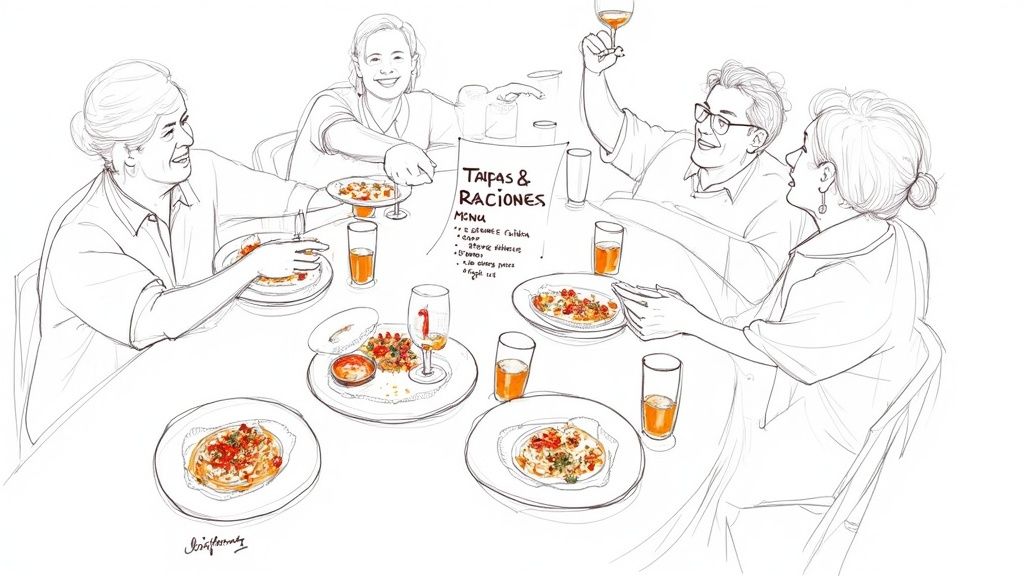
First things first: resist the urge to order everything at once. The real beauty of tapas lies in its wonderfully unhurried pace. A good rule of thumb is to start with two or three dishes per person and see how you go from there.
Ordering in waves means your food always arrives fresh and hot. It also lets you gauge your appetite as the evening unfolds, leaving room to try a wider variety of dishes. This slow-and-steady approach is all part of the fun.
Master the Menu Lingo
Getting a handle on a few key terms will completely change how you order, turning guesswork into a delicious, well-planned feast. The most crucial thing to understand is the difference between individual portions and the larger plates meant for the whole table.
- Tapa: This is your smallest serving. It's perfect for one person to try something new or for a couple to share a quick bite.
- Media Ración: A "half portion." This is a great size for sharing between two or three people who want a bit more than just a single taste.
- Ración: The full-sized plate, designed for a group to share properly. A few different raciones can easily make up a full, satisfying meal.
Think of it this way: a tapa is the teaser, a media ración is a proper taste test, and a ración is the main event for everyone at the table to dive into.
Finally, knowing a few simple Spanish phrases can make a world of difference. Beyond the basic greetings you can find in our guide on saying how are you in Spanish, here are some absolute essentials for any tapas bar:
- La cuenta, por favor: The bill, please.
- Vino tinto / Vino blanco: Red wine / White wine.
- Una caña: A small draft beer – the classic drink to go with tapas.
With this little bit of knowledge in your back pocket, you’re more than ready to jump in and embrace the true, vibrant spirit of tapas.
The Real Story Behind Spanish Tapas Culture
There’s so much more to tapas than just a menu of delicious small plates. It's a way of life with a fascinating history. While nobody knows the exact origin for sure, one of the most popular tales involves King Alfonso X of Castile. Legend has it that while recovering from an illness, he could only manage small bites of food with his wine. He found the practice so sensible that he later ordered all taverns to serve a snack with every drink to curb public drunkenness.
From this royal decree, a culinary tradition was born. The word tapa itself literally translates to "lid" or "cover." It comes from the old Andalusian habit of placing a slice of bread or cured ham over a glass of sherry, a practical way to keep the fruit flies out. What started as a simple, functional gesture has since blossomed into a cornerstone of Spanish identity.
A Cherished Social Ritual
At its heart, tapas culture is all about socialising. The Spanish even have a dedicated verb for it: tapear. It’s not just about eating; it's about the action of hopping from one bar to the next, grabbing a drink and a signature tapa at each spot before moving on.
Forget the idea of a formal, sit-down meal. This is a dynamic and spontaneous way to spend an evening, keeping the conversation and energy flowing as you explore the culinary landscape of a neighbourhood with friends.
The essence of tapear is movement and variety. It's a culinary journey shared with friends, where each new bar brings a new flavour and a fresh topic of conversation.
From Spanish Streets to Singaporean Tables
This idea of sharing small plates and hopping between spots feels right at home in Singapore. Think about meeting friends at a hawker centre – you don’t just order one dish. You share plates of chicken rice, satay, and char kway teow, creating a communal feast.
Tapas culture taps into that exact same spirit. The focus is less on a single main course and more on tasting a little bit of everything, all while strengthening friendships around the table.
In both Spain and Singapore, food is what brings people together. It’s the perfect reason to meet up, catch up, and take part in a ritual that’s all about community. The energetic buzz of a tapas bar in Seville isn't a world away from the lively hum of a bustling Singaporean food court—both are fuelled by the simple joy of sharing great food with great company.
How to Spot an Authentic Tapas Bar in Singapore
In a city like Singapore, with its endless dining choices, finding a spot that serves up real-deal tapas bar food can be tricky. A truly authentic experience is about so much more than what's on the plate. It's about the vibe – that bustling, communal, and unmistakably Spanish atmosphere. Whether it’s a cosy, rustic-looking spot or a sleek modern joint, the energy should be buzzing and social.
A quick look at the menu is often your best first clue. You’re looking for a serious commitment to high-quality, authentic Spanish ingredients.
- Premium Cured Meats: Is there proper Jamón Ibérico or Chorizo Ibérico on offer? These aren't just menu items; they're a statement of quality.
- Artisanal Cheeses: A good tapas bar will proudly feature Spanish cheeses, like the iconic Manchego or a smoky Idiazabal.
- Core Ingredients: Spotting specific ingredients like Padrón peppers, piquillo peppers, and real Spanish olives is always a fantastic sign.
Look Beyond the Food Menu
Don't stop at the food! An authentic tapas bar puts just as much love into its drinks list. There should be a well-chosen selection of Spanish wines, especially classic grape varieties like Tempranillo and Albariño. And of course, you should find Spanish staples like a good sherry (fino or manzanilla), vermouth (vermut), and a properly made sangria—not just some overly sweet fruit juice mix.
A truly authentic tapas bar understands that the drinks are not an afterthought; they are an integral part of the social ritual of tapear. The beverage list should be a celebration of Spanish regions.
At the end of the day, it's the little details that scream authenticity. The Singaporean F&B scene is incredibly competitive, so the best places stand out by offering a genuine slice of Spain, from the ingredients they import to the lively, social world they create inside their doors.
Ready to start your search? Have a look at our guide to some of the best tapas restaurants in Singapore and see what real authenticity looks like.
Got Questions About Tapas? We’ve Got Answers
Even with the basics down, a few questions always seem to come up when you’re about to dive into your first real tapas experience. Getting these sorted will help you walk into any tapas bar with the confidence of a local.
Let’s clear up a few common head-scratchers.
Are Tapas Meant to Be a Full Meal?
Traditionally, not really. The classic Spanish way, known as tapear, is more like a culinary crawl. You’d hop from one bar to the next, grabbing a drink and just one or two tapas at each spot before moving on.
But things have changed. These days, it’s completely normal to settle in at one bar and order a bunch of different plates to share. It’s a fantastic way to build a full, varied meal right at your table.
How Big Is a Tapa, Anyway?
Think of a tapa as a small appetiser, maybe a few good bites, perfect for one person. If you're with a group and find a dish you all want to try, look for a ración on the menu. That’s a full-sized dinner portion, ideal for sharing among two or three people so everyone gets more than just a tiny taste.
What if I’m a Vegetarian?
No problem at all. While Spanish cuisine loves its ham and seafood, there are plenty of incredible meat-free options. You really can't go wrong with classics like Patatas Bravas (those amazing spicy potatoes), Pimientos de Padrón (little fried green peppers), or a hearty slice of Tortilla Española (Spanish omelette).
Many modern tapas bars are also getting creative with fantastic plant-based dishes, so you’ll have lots to choose from.
To Tip or Not to Tip?
In Spain, tipping isn't a requirement, but it’s always appreciated for good service. If you had a great time, leaving a small tip of 5-10% is a nice gesture. Simply rounding up the bill is also common practice. It’s a relaxed approach, much like you’d find in many places here in Singapore.
Knowing these little cultural details ahead of time means you can skip the guesswork and focus on what really matters: enjoying fantastic food in great company.
And if you want to take your social game to the next level, joining a language exchange in Singapore is a brilliant way to practise your Spanish and connect with others who love the culture.
Ready to start your own Spanish language journey? At Spanish Council Singapore, we offer engaging classes for all ages that bring the culture to life. https://spanish.sg